What We Deserve: Reimagining Stranger Things' Women Beyond the Duffers' Vision | by Beatrix Kondo
Part 6 | Upside Down Feminism: How Stranger Things Systematically Destroyed Its Women

Fan fiction writers have been doing the Duffers' job better than the Duffers for years. They write Eleven settling into Hawkins Middle School, awkward and fierce and slowly learning what it means to choose things for herself. They write Robin and Vickie moving into a crappy apartment together after high school, arguing about whose turn it is to do the dishes, building something ordinary and therefore extraordinary. They write Max on a skateboard in 1989, healed, fast, free. They write Nancy Wheeler at thirty, byline in a paper that matters, desk covered in notes, coffee going cold because she forgot to drink it again—a woman who wants it so much she forgets to stop working.
These stories exist by the thousands. They are the audience's answer to the question the show refused to ask: what if we let them have it?
The answer, it turns out, is better writing.
Let's do this properly. Let's go through each of them and build the version of Stranger Things that the characters deserved—and demonstrate, in the process, that feminist storytelling and commercially successful storytelling are not the opposites the industry pretends they are. It’s just respectful.
Barb Holland Lives
The fix for Barb is both simple and radical: she survives the Upside Down.
She's found, barely alive, by the end of Season 1. And here's what changes: Barb, who noticed everything, who sat alone by that pool watching the social dynamics of Steve Harrington's party with the clarity of someone who's never been distracted by wanting to be liked—Barb becomes the character who figures things out first. She's observant. She's underestimated. She's the girl who everyone forgot to notice, which means she's the girl who noticed everything.
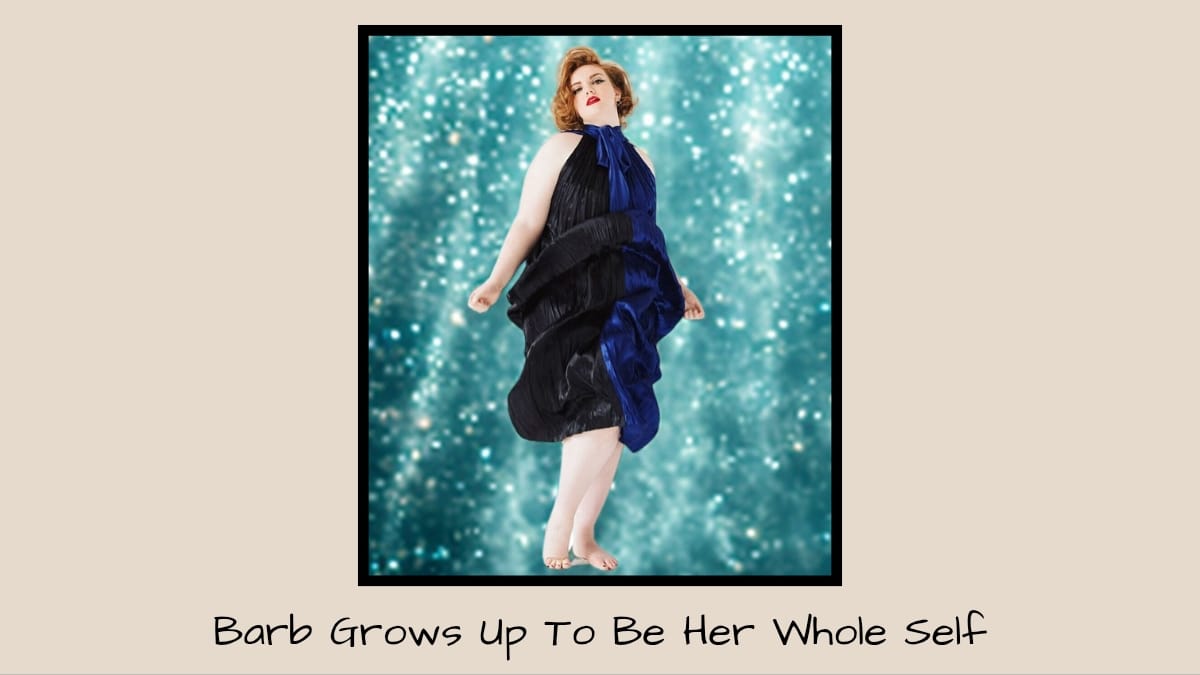
Season 2 Barb recovers while Nancy is fighting the Demogorgon's aftermath, and their friendship becomes the emotional spine of the season rather than its wound. Barb's survival doesn't erase Nancy's guilt—it forces Nancy to reckon with it while Barb is still there, demanding to be seen. Their reconciliation is earned across episodes, not delivered as a grave and a closed case. The fat girl in glasses who everyone dismissed becomes the person who cracks the Hawkins Lab connection, because she's been studying how institutions ignore the inconvenient since she was old enough to realize she was inconvenient.
She gets to be the observer who becomes essential. The voice of reason who gets to be right, alive, and credited for it. This costs nothing. It requires only the decision that “the fat girl’s” life has value beyond its narrative function as sacrifice.
Eleven Gets What She Always Wanted
Jane Hopper wanted a Snow Ball. She wanted to go to school. She wanted friends who weren't in mortal danger, a father who chose her, a bedroom with things in it that she picked herself. She cried when she got to go to the Snow Ball in Season 2 because it was the first time she'd been allowed to want something small and have it.
The version of Stranger Things these characters deserve ends with Eleven—who actually starts to be called Jane—doing exactly this: she closes the gate, defeats Vecna, and comes home.
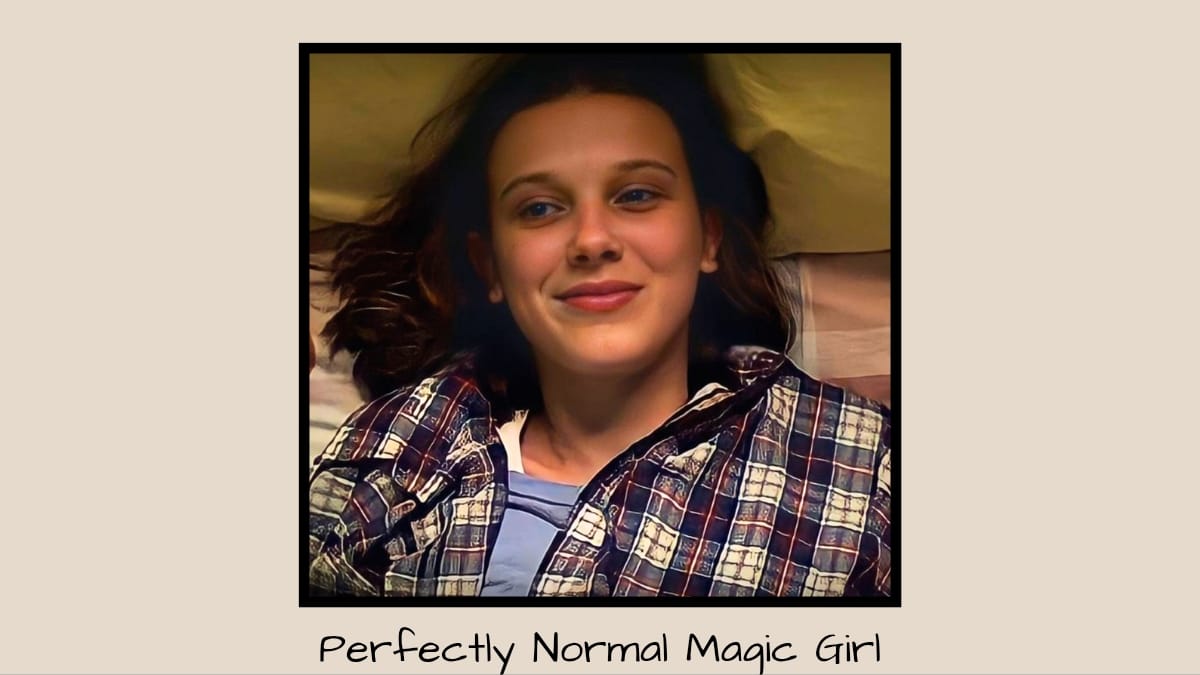
She walks through the front door of the Hopper cabin. She eats Eggos. She starts her junior year at Hawkins High with a locker she decorates with stickers. She is, for the first time, aggressively, defiantly, deliberately ordinary. She still has her powers and uses them occasionally, for things she chooses, on her own terms. She is not a weapon. She is a teenager who has earned the profound right to be boring.
The epilogue shows her at eighteen, leaving for college, Hopper embarrassing her at the car with too many hugs, Joyce taking seventeen photos. The magic of childhood doesn't fade when you grow up—it transforms. It becomes the magic of choosing your own life. Usagi Tsukino grows up to be queen. Buffy shares her power with every girl who could use it. Sakura keeps her cards. Jane keeps her telekinesis and her family and her future.
Ross Duffer said giving her a normal domestic life would cheapen what she symbolizes. What she symbolizes is that traumatized children deserve futures. Cheapening that symbol requires denying her exactly that.
The epilogue where she gets it is the most powerful ending the show could have produced. It would have broken the internet in the right way. Instead they got the lowest IMDb rating in the series.
Max Heals, Fully, and Gets to Be Happy
Max's arc in the version she deserves runs like this: she survives Vecna, wakes up, and the show acknowledges what she did to survive. Not what Lucas did. What Max did. Her mental fortitude, her knowledge of Vecna's architecture, her refusal across eighteen months of comatose consciousness to stop moving toward the light.
Lucas is there and he matters. His vigil was real and her love for him is real as well, and that love was one of the things she was running toward—alongside her own survival, alongside her own will to live, which needs no romantic justification for a teenage girl the show spent five seasons punishing for existing.
She wakes up and she says: "I heard you. I knew you were there. I found my own way out."
And Lucas, who has been genuinely good this whole time and deserves the credit the show was too cowardly to deny Max in order to give him, says: "I know. I never doubted you."
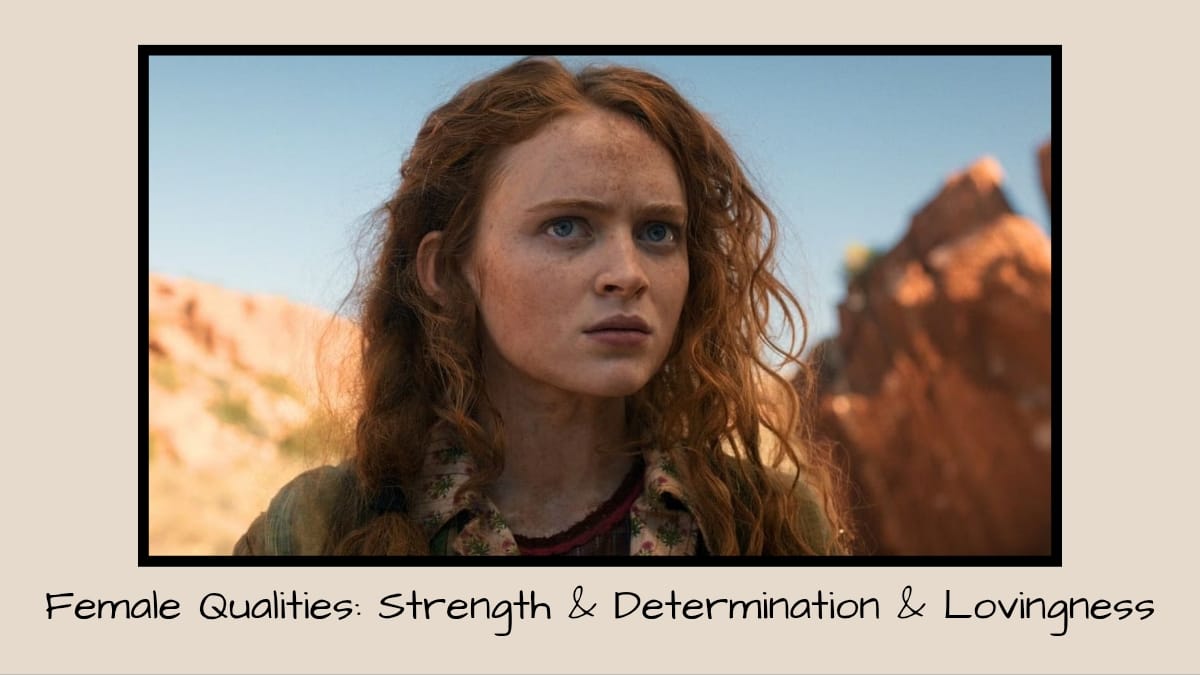
Then Max heals. This takes time and the show doesn't skip it. She does physical therapy. She gets her sight back slowly, partially, then fully. She gets on a skateboard for the first time since her bones were snapped and she falls twice and then she goes faster than she ever has before. The camera stays on her face: terrified and alive and choosing speed over safety the way she has since Season 2, because that's who she is and the show finally, finally leaves her alone to be it.
Season 5's epilogue shows Max and Lucas at prom. It shows her at graduation. It shows her doing something after—something she chose, something unrelated to being anyone's girlfriend or anyone's trauma narrative. It shows her existing for herself.
Robin and Vickie Stay Together
This one is the simplest of all the fixes, because it requires only that the Duffers apply their own stated logic consistently.
Lucas and Max survive the literal apocalypse together and get an epilogue. Hopper and Joyce find each other across a lot of trials. Steve gets to be sentimental about his found family from a rooftop. Mike gets to be a romantic hero.
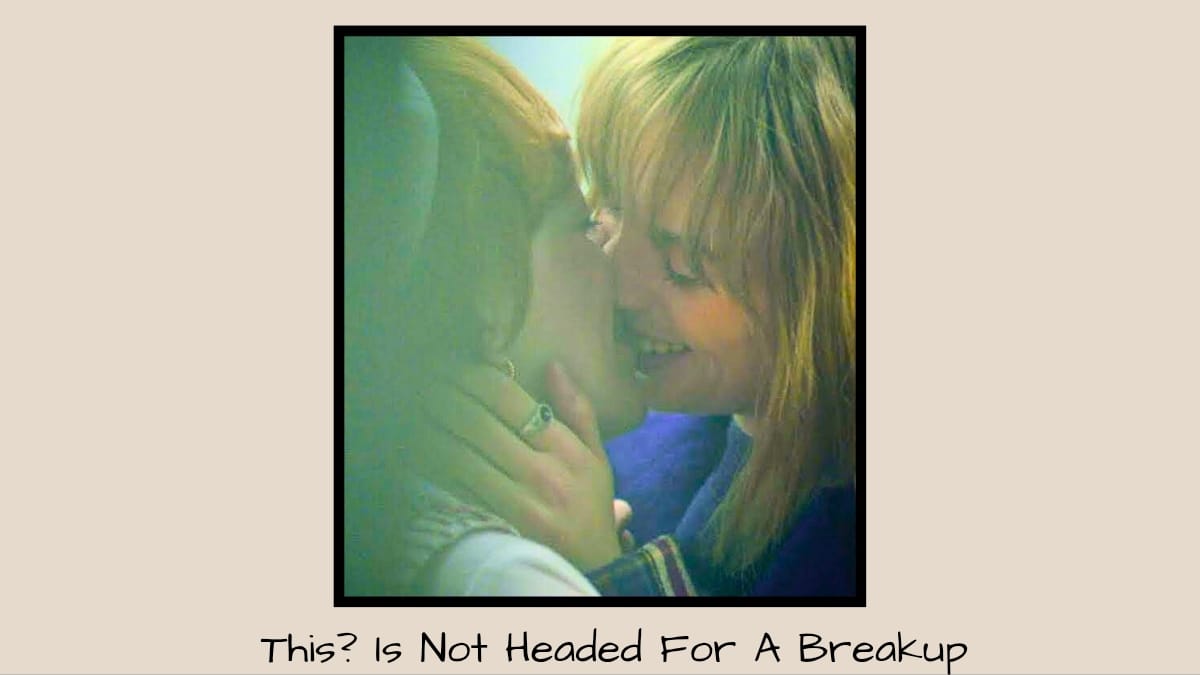
Robin and Vickie stay together. The epilogue shows them. Maybe they're in the same city for college, maybe they're doing long distance, maybe they've figured something out—the point is that their relationship is accorded the same presumption of continuation that every straight couple in the show receives automatically. They are not reduced to a statistic about college relationship retention rates. They are two people who found each other in Hawkins, Indiana, in 1986, against considerable odds, and the show treats that as the miracle of ordinary love that it is.
Robin's coming out scene is restructured so she tells Steve because she chooses to, not because a Russian truth serum forces the confession. The emotional content of Maya Hawke's performance was always there—the vulnerability, the terror of risking yourself on someone who might destroy you for it—and it works better when the choice belongs to Robin. When she decides Steve can handle it. When her identity is her own to reveal.
Will's coming out arc still happens, still works, still earns everything it's given. Robin's arc also happens, also works, also earns. There's room. There was always room. The Duffers chose not to use it.
Nancy Wheeler, Investigative Journalist
Nancy Wheeler breaks the Hawkins story.
This is what the show built her for across five seasons. She started investigating Barb's disappearance when everyone told her to move on. She exposed Hawkins Lab when the Post spiked the story. She started her own paper. She led operations from a radio station. She was, functionally, the show's most consistently competent human character—the one who always found the thread and followed it regardless of institutional resistance.
The finale of the version Nancy deserves has her with the story. Not as a background character on someone else's rooftop. As the journalist who documented what happened to Hawkins, who got it published, who made sure the world knew what Hawkins Lab did to those children. Her byline on the piece that changes everything. Her name on the story she was always meant to tell.
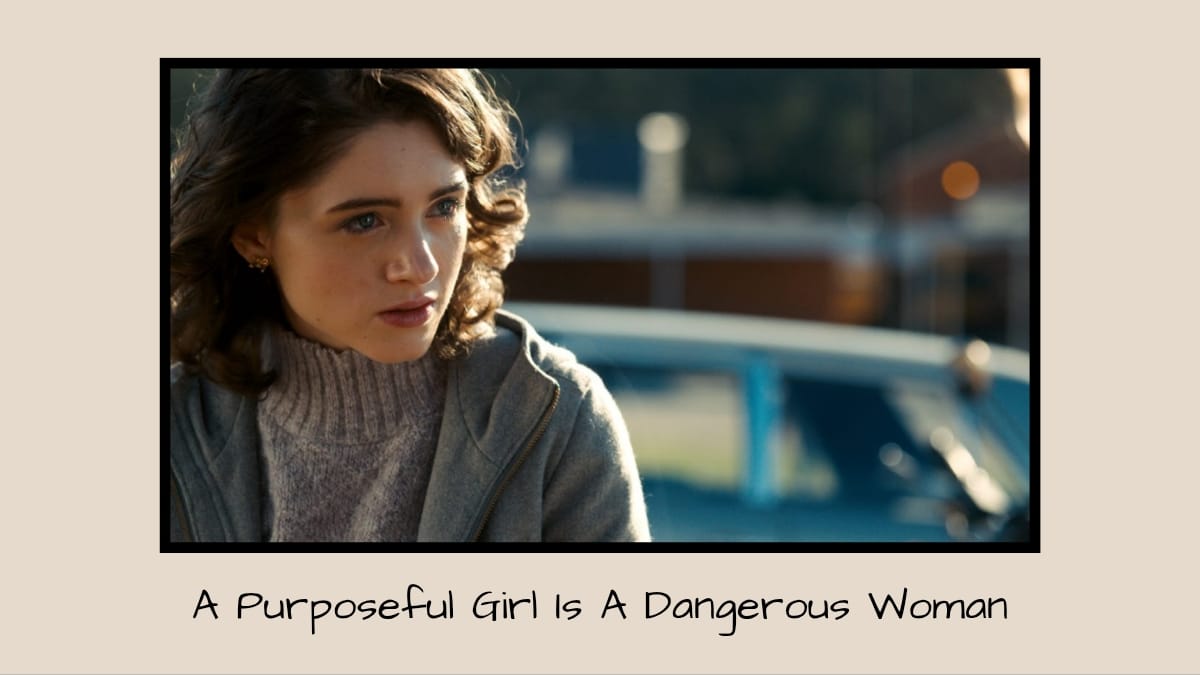
She gets into Emerson. She goes. She studies journalism with the same ferocity she brought to every investigation that mattered to her. She graduates and then goes to work at a paper that makes her earn it and then lets her do it. Years later, covering something enormous, she thinks about Barb Holland—alive, in this version, a friend who answers her calls—and about the girl she was at fourteen, notebook in hand, refusing to accept the official story.
She never stopped being that girl. The Duffers stopped seeing her.
Jonathan gets NYU. Good. Steve gets Hawkins. Good. Nancy gets the career she announced she wanted in Season 1 and pursued with single-minded determination through Season 5. Also good. The argument that this is "the obvious path" and therefore insufficient proves too much: Dustin becoming valedictorian is obvious, Will's powers being tied to his identity is expected, Hopper surviving Russia is convenient. The obvious path for the ambitious girl who wanted to be a journalist is journalism. Denying it to manufacture complexity is nothing but punishment wearing the costume of nuance.
Joyce Gets Her Own Story
Joyce Byers tore through dimensions for her son. She deserves an arc that belongs to her.
In the version she deserves, Season 5 gives Joyce a scene where Will—now coming into his own, claiming his identity, growing into the person he's becoming—turns to her and says something like: Mom. What do you want? Not for me. For you. And she doesn't know immediately. The question lands strange after years of her wants being entirely organized around her children's survival.
She figures it out over the course of the season. It's not dramatic. It's small: she wants to open the shop she talked about once, briefly, in Season 1. She wants to live somewhere that doesn't have a direct portal to a dimension of screaming darkness. She wants Hopper to stop leaving his boots by the door where she trips over them and she also wants him to keep leaving his boots by the door because it means he came home.
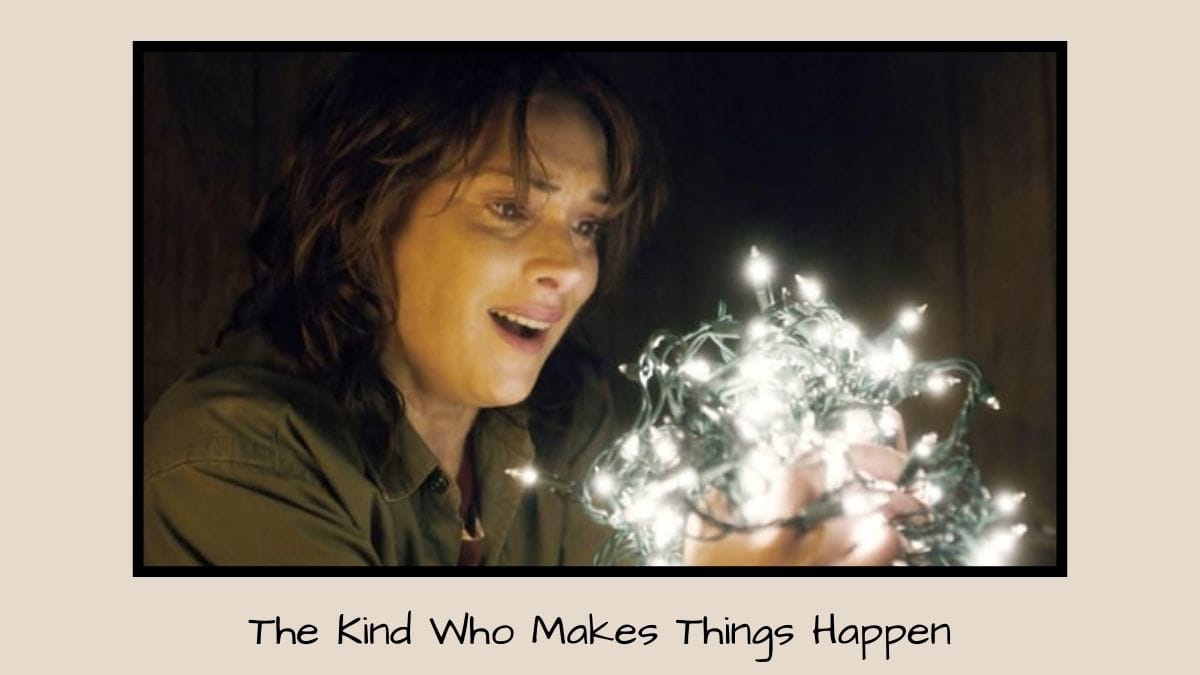
She gets all of this. The fierce protector who was always running toward something—her son, Hopper, the truth—gets to arrive somewhere. She is allowed to stop running long enough to want something for herself, and the show treats that wanting as equally worthy as any battle she ever fought.
Winona Ryder carried an entire cultural moment in the early 1990s. Stranger Things cast her knowing exactly what she represented to the generation watching it. Then it reduced her, season by season, to orbit. The show owed her a center of gravity. The version Joyce deserves puts her back at the center of her own story.
Karen Gets the Power She Chose
The wine bottle is still her weapon. Keep it. The symbolism of the thing that numbed her becoming the thing that defends her daughter is genuine and earned and Cara Buono played it beautifully.
Change one thing: Karen chooses it.
The version Karen deserves has her hear Holly scream and make a decision. She gets out of the bathtub. She grabs the bottle. She thinks, or maybe she doesn't think, she just acts—but the framing makes clear this is Karen deciding, Karen moving, Karen's rage and love and five seasons of swallowed feeling directing her body toward the monster that invaded her house.
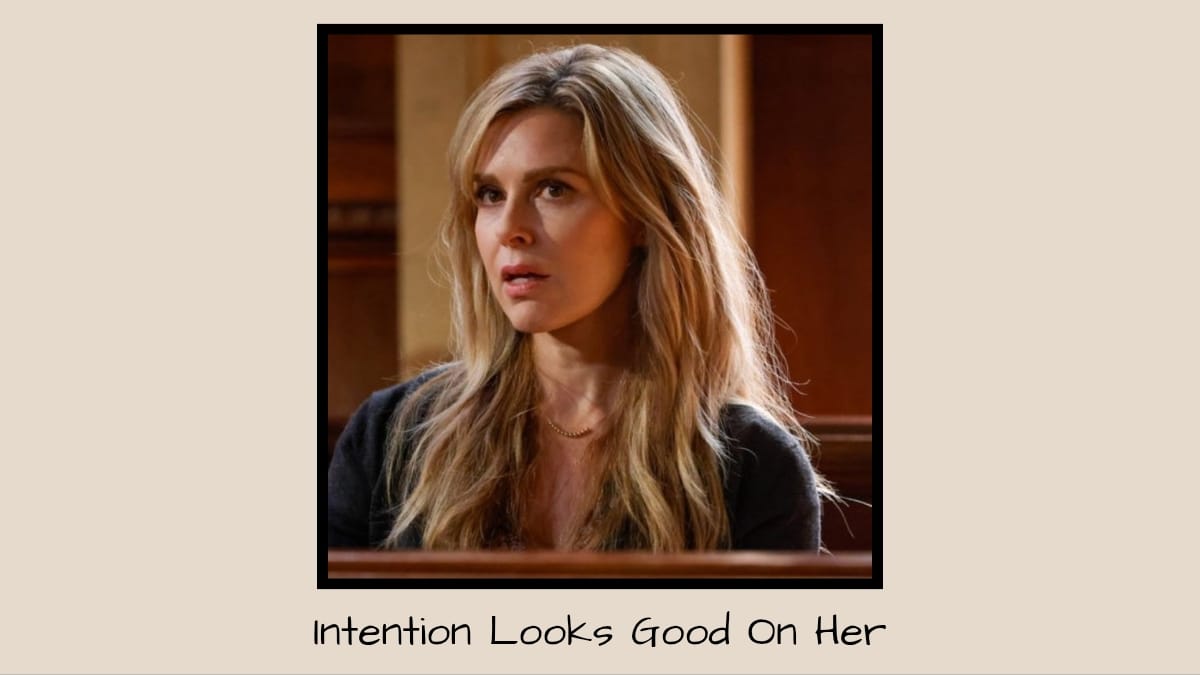
Maternal instinct is real. It also coexists with conscious choice. Women who fight for their children are not overridden by biology—they decide, in a fraction of a second, that this is worth fighting for and they are the one who's going to fight for it. Giving Karen that decision doesn't diminish her love for Holly. It makes her a person instead of a biological event.
And then—give her the four seasons too. Give her the arc that shows her numbness accumulating, her dissatisfaction sharpening, her awareness of what she's been doing to herself slowly surfacing. Not so that she becomes someone different by the time she fights the Demogorgon, but so that her fight lands as the culmination of a woman who'd been building toward something without knowing it. The broken glass connects to everything she'd been swallowing. The choice to fight connects to every moment she'd decided not to make a different choice.
This requires understanding Karen as a full character from Season 1. It requires four seasons of writing her interiority rather than her surface. The Duffers weren't willing to do that work. Cara Buono did it anyway, in her performance, without script support. The version Karen deserves gives Buono the script to match what she was already doing.
What Feminist Storytelling Actually Is
There is a persistent industry belief that treating women as full humans is a political concession that costs narrative momentum, that representation is something added to a story rather than intrinsic to whether a story works. The Duffers' choices reflect this belief at every level: Eleven's erasure is framed as thematic necessity, Robin's relationship erasure is framed as realism, Nancy's diminishment is framed as complexity. The women were sacrificed, the logic goes, for the good of the story.
The version of Stranger Things built from the alternatives above gives the lie to this.
Barb surviving makes Season 1 and 2 richer, adding a survivor's perspective to the Hawkins Lab investigation and a reconciliation arc that does more emotional work than a grave. Jane getting her happy ending makes the series finale more devastating and more satisfying—audiences crying because she's finally safe, finally home, finally ordinary, after everything. Max's healing arc gives Season 5 something it desperately needed: a recovery narrative that honors the difficulty of surviving rather than resolving it through romantic shorthand. Robin and Vickie's continued relationship gives the show's lesbian storyline the coherence it earned and Will's queer arc the context it needed—he doesn't come out as gay into a vacuum, he comes out into a world where Robin already showed him it was possible, and then the show demonstrates that possibility has futures. Nancy breaking the story gives the finale a human-scale consequence to match its supernatural climax: the world finds out what happened in Hawkins because a female journalist refused to let it be buried. Joyce finding what she wants gives the show's most kinetically fierce character a stillness she earned. Karen choosing to consciously fight transforms a single powerful scene into the culmination of a character arc.
None of this would require adding screentime. It would require redistributing what was already there. Because, screentime and plot complexity to characters is what to economic and social resources are for actual people. The epilogue that gave Mike a speech about believing Jane was alive somewhere—that screentime belongs to her, alive and at home. The "realistic" dissolution of Robin and Vickie takes less than a single line; the realistic continuation would take one scene. Nancy's manufactured confusion replaces the ten seconds needed to show her at a desk, working, satisfied. These are choices about what the story thought was worth showing, and every choice revealed exactly what the story valued.
What the Fan Fiction Already Knows
The Archive of Our Own contains thousands of Stranger Things fics that give these women what the show refused to. They are written by people who loved the show enough to keep imagining it past its failures. They are written in stolen hours, without pay, without industry credit, out of the same impulse that drove Nancy Wheeler to start her own paper when the official institution failed her: if the story you need doesn't exist, you make it.
This is what audiences do with stories that matter to them and fail them simultaneously. They love the world enough to rebuild it right. They take the characters the show abandoned and they imagine forward, writing the futures that were stolen. They don't do this as consolation for getting less than they deserved, but as an assertion of what good storytelling looks like.
The fan fiction writers have already taken in a lot of media. So have regular viewers, and we’re all kind of writing the story, the next episode, the next season as we go along. And, many of us are feminists and women. So we already know that Jane can have her powers and her Eggos and her chosen family. We already know Max can heal and be happy and still be Max. We already know Robin and Vickie can stay together and it doesn't require a statistical footnote about college relationship retention. We already know Nancy Wheeler breaks the Hawkins story and gets her byline and her career and her life, all of it at once, without having to apologize for knowing what she wanted.
They know because they understand something the Duffers apparently don't: giving women what they want doesn't cheapen the story. It is the story.
What We Can Demand
The Sacrificial Lamb Economy runs on the premise that audiences will accept it. That we’ll absorb the grief of watching capable women get fridged and erased and diminished and repackaged as confused, that we’ll carry the disappointment in silence, that we’ll be grateful for the crumbs because at least the women were present, at least there were women at all.
The backlash against the Stranger Things' finale is evidence that this premise is eroding. Audiences have developed the vocabulary to name what's being done and now we have the tools to hold creators accountable and the platform to make that accountability legible. We are, in significant numbers, no longer willing to perform gratitude for crumbs.
What we as audiences can demand is simple and total: stories where women's lives, desires, ambitions, relationships, and futures are treated as inherently important. Stories where female power is a feature to be celebrated rather than a problem to be resolved. Stories where the ambitious girl gets her career, the traumatized fighter gets her healing, the lesbian gets her romantic relationship, the magical girl gets her ordinary life, and the fierce mother gets her own arc.
Stories that understand "what if we let them have it?" is a question with a good answer. The fan fiction writers know this. So does, occasionally, the industry itself—when it chooses to.
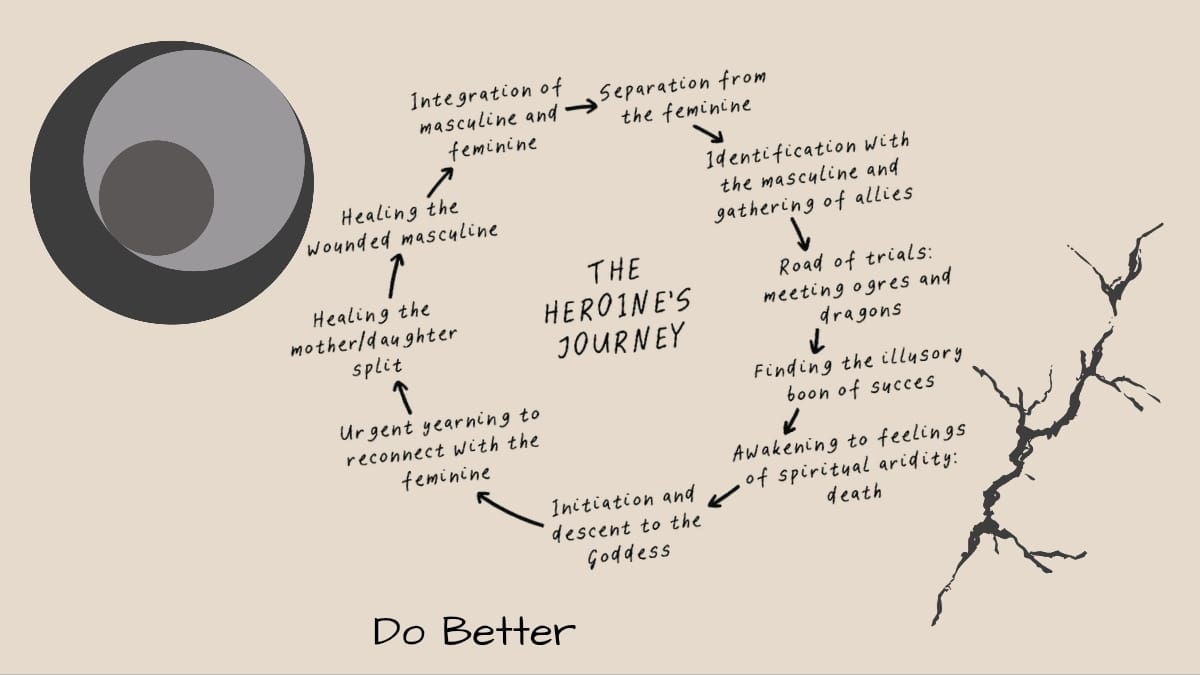
In What If...? Season 2, Marvel's own animated multiverse gave the Scarlet Witch what the live-action films spent years refusing her: a heroic arc, uncorrupted, in an Elizabethan alternate reality inspired by Neil Gaiman's Marvel 1602, where Wanda-Merlin is an ally, a protector, a woman using her power to save a world rather than unravel one. It took an animated anthology and a parallel universe to let her be who she always could have been. These women were never the problem. They always had potential. What Maureen Murdock called the heroine's journey—the descent, the reclamation, the return—was always available to every one of them. The writers just had to be willing to let them take it.
The Duffers built Stranger Things on the bodies of disposable girls and called it nostalgia. What we deserve is the story where those girls stopped being disposed and started being allowed to become whoever they were going to be.
The Upside Down closes. The gate seals. Everyone goes home.
Every last one of them.
I'm Beatrix Kondo and I evolved like a Digimon: from level 1 translator to final boss of a 30+ year quest dismantling plot holes and gender issues in pop culture. I write about K-dramas, anime, and everything Asia produces (the good and the questionable) for international outlets. My specialty? Ruining happy endings by pointing out red flags and finding feminism in dungeons where patriarchy thought it was safe. Spoiler alert: criticism without context is just a rage tweet with a degree.
We are our only algorithm!
Do postmodern magic!
Get on our Linktree!
More connection! More sharing!
May 1, 2026 -- DANCING GODDESS BY HEIDE GOETTNER-ABENDROTH
Included in Pythia & Tiamat subscriptions, tickets available for Corras and Yacumamas.
Public Visitors, become a member to join in the scheming 😁
Reach out anytime for any reason: info@medusarising.org.
Find us everywhere we are with the social web: @gorgons@medusarising.org.
( ^-^)ノ∠※。.:*:・'°☆ ( ^-^)ノ∠※。.:*:・'°☆ ( ^-^)ノ∠※。.:*:・'°☆