The Daughters of India | by Arpita Biradar
Essay | Bonus Post | So yes, if revolution has to begin, we start from the land, and our daughters.

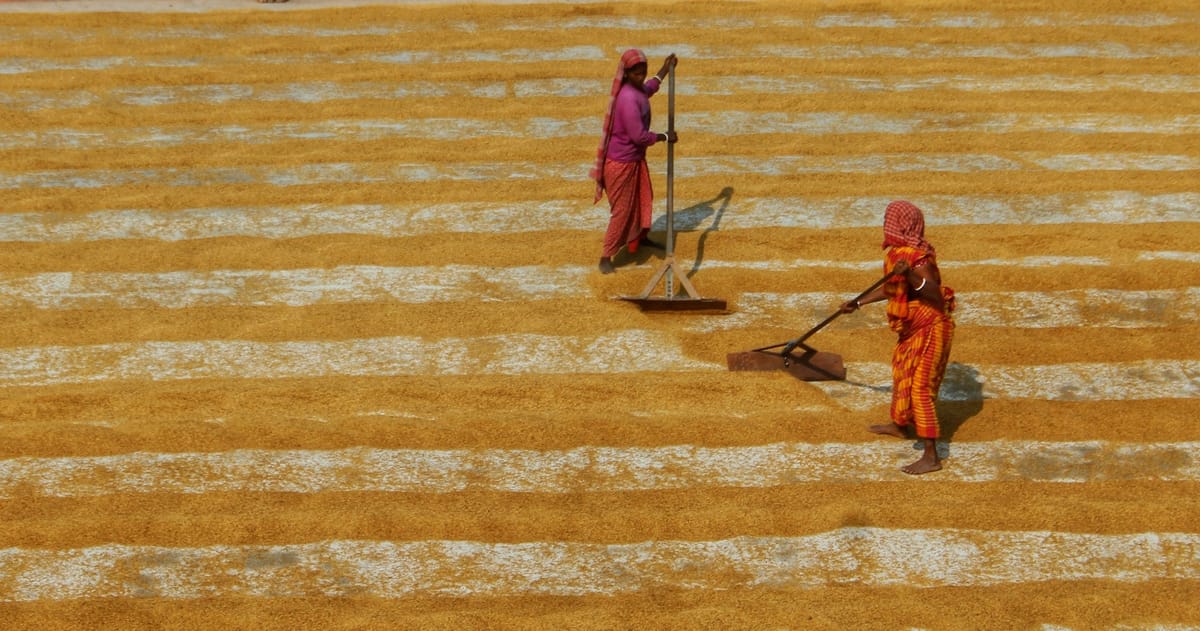

Women were suppressed for decades by a system ruled by ancient social norms that pushed them to the lower rungs of the ladder. With little economic and political power, women adhered to tradition, maintaining the status quo, describing it as fate, a natural order prescribed to them. What the country needed was systemic change. The year 2005 was a major step in this direction. The Parliament of India amended gender-discriminatory provisions in the Hindu Succession (Amendment) Act, 2005, giving daughters equal rights as sons in joint family property. The daughters of India were coparceners by birth in the ancestral property. The provisions gave them the right to own the land passed down, and many persevered on.
But amending laws on paper and implementing the same are two separate fights. The former has the power to start the conversation, but only the latter — the implementation, an area India has terribly failed in — can transform a society with its practices rooted in age-old traditions that serve one gender.
A meagre 14% of landowners are women, owning 11% of agricultural land in rural landowning households. Line up every landowner in India, and the women would stand like a thin row in a sea of men. Women contribute substantially to on-farm labor but are not classified as “farmers”; they are merely viewed as “helpers.” The label ‘cultivator’ remains out of reach for most. The title ‘cultivators’ denotes not just ownership but authority and primary decision-making power, and is seen as unwomanly. Women’s names on the deeds is indubitably patriarchy’s worst nightmare.
The law can be applauded for its potential, but progress can only be measured in terms of effectiveness. And the numbers above narrate their own story. Policies, weighed only in terms of their capacity, distort the ground reality.
India’s aggressively launched campaign “Beti Bachao, Beti Padhao” (Save the Girl Child, Educate the Girl Child) made lasting changes in the child sex ratio by preventing female feticide and improving girls’ survival and education. The country remolded itself in staggering ways but failed to eradicate the view of women as possessions. In many corners of the country, a potential change in her last name post-marriage is still viewed as a liability because with that name change her land now belongs to the husband’s family. If object is what women are reduced to, how will her natal land not be parceled out to male heirs? A family wants to keep control of its land because for India’s farmers, land is their only resource and wealth.
The push for women’s empowerment through property ownership isn’t entirely about financial power and reclaiming what’s rightfully ours, but women’s liberation. There’s clear evidence that a woman having her own property or inheritance lowers domestic violence against women and hands them decision-making power, liberating them from violent relationships. Women as a whole are better positioned if they inherit as daughters. But when it comes to contentious topics (with women’s rights issues always among them), reality is often unpalatable. Research says women are significantly more likely to inherit land as widows than as daughters. Modern India has its women’s rights tethered to their marital status, where to bequeath as a wife of the deceased is easier than as a daughter; there’s a long way towards gendered wealth equality.
It’s outrageous when people justify the persistent disparity by pointing to the tradition of passing gold jewelry down to daughters through generations. Transfer of movable assets does not legitimize widespread denial of women’s rights on immovable property. Gold does not garner a woman the respect or protection that land seems to offer.
When I am asked about the richness of my country, I underscore the diversity India holds, with thousands of distinct caste groups with their own sets of beliefs, but I am also petrified by this variety, knowing it results in cultural gaps, a topic so delicate that if not handled with caution, it splits society into pieces.
Is a male/female lens the best to use on the question of land and its ownership in a country with so many differences? When the problem statement isn’t just women, but which woman? Woman of which state? Woman of what caste? Which sub-caste? A married one, a widowed one, or a single one? A learned one or an unschooled one? An urbanite or a rural one? How can we allow all these different kinds of women to inherit land?
The answer is yes. Certainly yes. All these different kinds of women.
But this yes is still very unevenly spread. The women of the forward caste may have higher chances of ownership than those from a backward caste; women still struggle. A woman of a progressive state may sign a deed, but a woman from conservative surroundings may not. A claim of a widow may get addressed, but a single woman’s may get disregarded. A literate one may leverage her education to enforce the law; an unschooled one is unaware of the law. Among all these differences we can see one constant: woman. So, in fact, viewing inheritance and landownership through the gender lens is where progress can be made. Even with copious research highlighting the matter, years after passing the law, the majority remains oblivious. The issue persists, with discrimination not just against a single category but against women as a whole. At this juncture, a gendered lens is not just justified but essential, paving the way to intra-gender solutions as we progress.
So yes, if revolution has to begin, we should start from here. From the land.
Arpita Biradar is a writer from India whose work moves between the personal and the political. With a background in finance, she chose to work in the social sector, hoping to be part of solutions to broader issues of inequality and inclusion. Her work has appeared in The Literary Cocktail Magazine. When she’s not writing, she’s reading some highly contentious book, fascinated by ideas that challenge comfort and certainty.
Comments are open to all members.
Let's discuss all the things!
MR is an autonomous RadMatFem project.
Tip for the contributors!
 PodBean Development
* Free Audio NEW EPISODE Friday 23 Jan w/ Jaclyn Lanae *
Reach out anytime for any reason: info@medusarising.org.
Ghost, collects no info on our subscribers. We own our list. Medusa Rising neither shares nor sells any subscriber/contributor information. All information shared with Medusa Rising is at the user's discretion. Pseudonyms, pen names, alt email accounts, not sharing location – all OK.
!! Feminist Safety First !!
( ^-^)ノ∠※。.:*:・'°☆ ( ^-^)ノ∠※。.:*:・'°☆ ( ^-^)ノ∠※。.:*:・'°☆