Some Further Thoughts on Asymmetrical Re-Worlding | by Therese Doherty
In response to some post-feminist pushback | Crosspost


Therese Doherty has graced Medusa Rising with several pieces over our first year. Her contributions, including this cross-post reflecting on her experience post-publication, have been both essential and emboldening to the RadMatFem project.
So, we're closing our first year here. This low, loamy, darkest, composting season requires a hiatus. We will see you again in mid-Januaray 2026.
— ES
Cross-posted from Offerings
from the Wellspring
[Images and pull-quotes by Medusa Rising]
I knew there was some possibility of negative feedback on my essay series on Medusa Rising, which was a regrettable risk I had to take, but since that has come to pass I’d like to provide some more clarification about why I wrote what I did, and what it actually means, since I guess it just isn’t clear. (Everything is so complex, so the ideas just keep coming, but I hope this is the last thing I will have to write on this unfortunate subject.)
It shouldn’t need to be said, but my critique is of ideas, not people (as I said in my piece on transgenderism). We all get pulled into trends from time to time, because that’s the nature of the online culture we’re beset with. (And I do think postfeminism is a ‘trend’, which I dearly hope will fizzle out eventually.) The main piece of a very personal iteration of postfeminism that I was critiquing, though it has some flaws, I agree with in part; the elaboration of ideas further down the track left a lot to be desired, however, and the links with more problematic (even misogynistic) content provided the nail in the coffin.
Over the past year I have wondered many times whether I have just been misunderstanding and getting things wrong. Doubt is pretty much my default setting. But every time I returned to the troubling content I was reminded anew why I had disliked it in the first place: problematic use of language, often with sexist undertones; the dismissal of feminism for erroneous reasons; a sometimes gleeful expression of the need for hierarchy in relationships; appeals to ‘nature’ and ‘instincts’ based on gender stereotypes (and evolutionary psychology); a quite individualist (and therefore ironically quite liberal) take on things, and more. And whenever I sought comment about it from others the response was the same—from young women to women in their seventies and every age in between there was shrewd critique (as there was from a couple of men too). It’s not possible that I am simply misunderstanding as the problems are pretty stark.
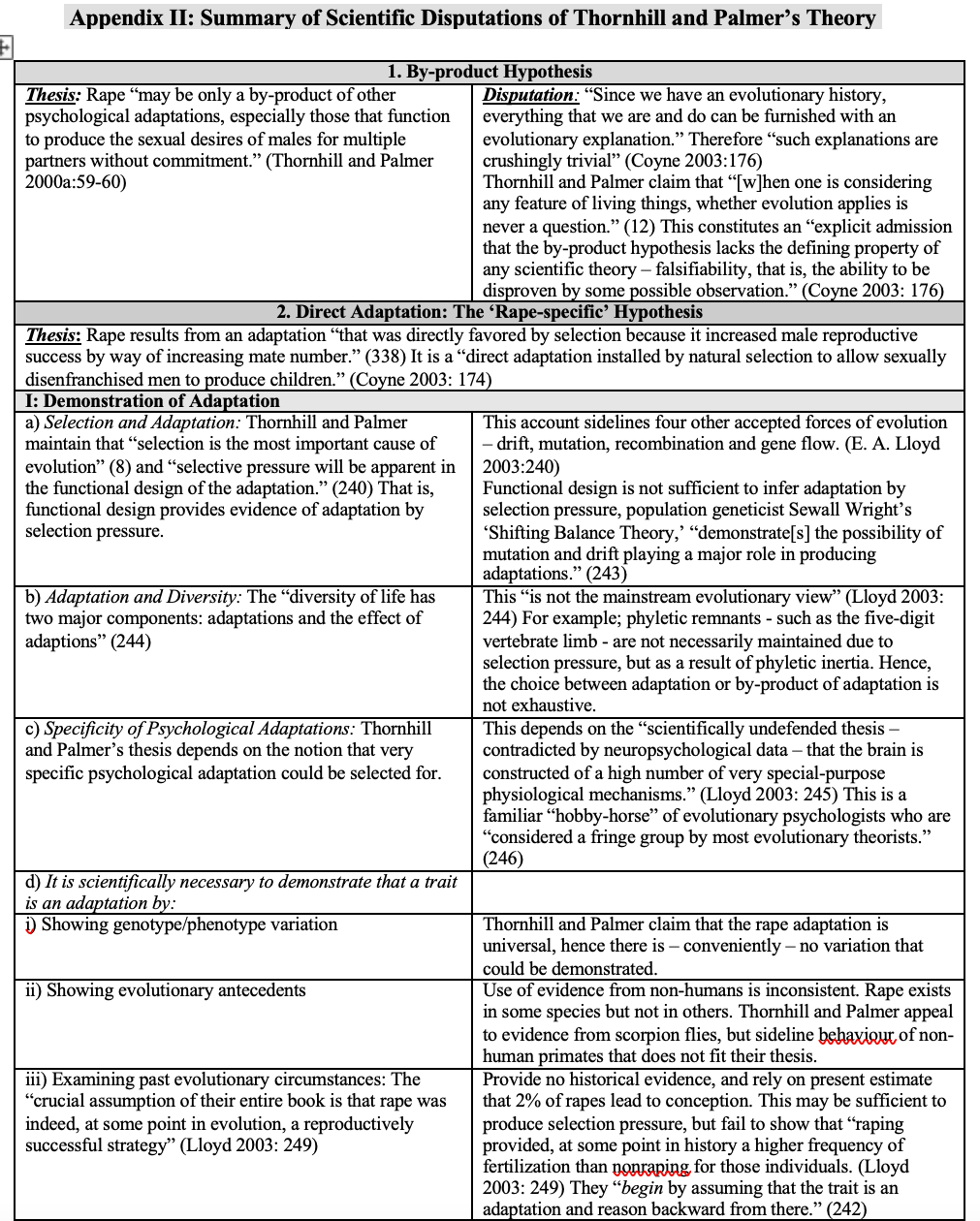
My reading of recent feminist writings, as well as older books like Catherine Keller’s From A Broken Web (1986), Riane Eisler’s Sacred Pleasure (1995), and the work of the glorious Susan Griffin, who passed away at the end of September, whose writing is an ever-renewing fountain of wisdom, gave me so many lightbulb moments (some of which I will lay out below), I knew I had to write something to organise my thoughts. It's how I often process things. As I said in a footnote to Part 1 of my essay:
This isn’t a new trend, just the latest iteration. Riane Eisler, writing three decades ago, noted that ‘revivals of “essentialist” gender roles through fundamentalism, neoconservatism, sociobiology [now evolutionary psychology], and some neo-Jungian mythopoetic writings [are] attempts to make something that is socially constructed appear as instinctual or biological.’ (1)
I also see this wave of ‘post-liberal reactionary feminism’ as emerging from the critique of the sex-denial of transgenderism. Judith Green says in her brilliant review of Louise Perry’s The Case Against the Sexual Revolution, which Green makes clear provides a powerful critique but a dismal prescription:
why are we now seeing the rehabilitation of evolutionary psychology as a supposed ally of feminism yoked together with the repudiation of the harms wrought by a sexist sexually liberal culture? I think it has something to do with the fact that the current resurgence of feminism is the product of the very urgent fight against the political erasure of sex. Knowing that men and women are different (and that men can’t be women and vice versa) is the ground zero of this movement. In the face of so much denial of the ways in which sex matters, the superficial appeal of sociobiology is perhaps not surprising. Also not surprising is the rush to blame feminism for unleashing ‘sex denialism’ in the first place. But this is a confusion. The assertion of the Women’s Liberation Movement was never that men and women were the same, but that women’s freedom required the overturning of male supremacy. Biology-knowing is a low, low bar in achieving that aim. (2)
She goes on to say:
If the appeal of sociobiology is mistaken but unsurprising, the embrace of traditional monogamous marriage is inexplicable … It would be bizarre if, in the midst of this resurgence of women’s liberation kick-started by the critique of gender, we were somehow to accept the dismal prescription for women to find fulfillment only in tending the home and crib, dependent upon men to protect and provide. If we aren’t careful, we will spend the next decades reconvening the Genes and Gender conferences held between 1977 and 1994, and rewriting The Feminine Mystique. (3)
As noted, women’s freedom requires the overturning of male supremacy, which is why I decided to focus on the idea of male dominance in my essay, as radical feminism is founded on a critique of it as the underlying system of patriarchy. It’s the very fabric of civilisation, the air we breathe. And if you add in an ecofeminist perspective we understand that civilisation can only exist because of violence and exploitation. I am typing this on a laptop which is a technology made possible because of the destruction of the homes, freedom, health and lives of other beings, human and nonhuman, and the Earth herself. There is death at my fingertips.