Meditations And Musings On Complaint! | by Jocelyn Crawley
Book Review | Ponus Post| Collective Action Matters


Real Talk
Medusa Rising likes a good tactic when we see one. In the age of deep atomization, lessons on collective action are needed. Medusa Rising also has a committed point of view that does not track Ahmed’s. Her queer ontology and trans activism do not comport with female liberation, AND transgender and LGB people deserve to live in dignity and in common. Gender and Sex are not interchangeable elements of reality. Gender is the primary system of domination supporting patriarchy. Our TQ and LGB cousins also have rights that protect access to the resources of work and lives free of harassment. Women’s sex based rights protect access to resources, as do all civil rights, and cannot be compromised – including the right to seek support to complain on behalf of our rights. Contradictions arise all the time, often to the detriment of women because male-het-cap-patriarchy knows a man when it sees one and it defends him.
Sara Ahmed, "Complaint as a Queer Method"
Sara Ahmed: On Complaint
Meditations and Musings on Complaint!
White supremacy and male supremacy are still alive and kicking for many reasons — one being that complaints about them are systematically and surreptitiously suppressed. In her important book Complaint!, feminist and queer theorist Sara Ahmed discusses the role of institutional suppression that keeps complaints of sexual harassment and racial discrimination from being articulated and addressed in the higher education sector. Many members of these institutions still cleave to antiquated principles of privileging white males while allowing them to overtly dehumanize and degrade women and people of color in all sectors of society–including the university setting. Individuals committed to anti-racist and anti-sexist practices must devise tenable solutions, so Ahmed presents her best strategy. But first, let’s look at the problem without fear and self-deception.
In the introduction to Complaint!, Ahmed explains the paradox of complaining. Specifically, she states that “To be heard as complaining is not to be heard” (1). To complain of injustice to be heard as merely complaining by some listeners, as expressing a preference instead of a need. We who have studied the many workings of oppression, like Ahmed and you and I, note a pattern. My speculation is that individuals who misread complaints as mere complaining often wish (consciously or unconsciously) to remain ideologically aligned with systems of domination and power. By dismissing complaints, they maintain their emotional, cognitive, and material investments in oppressive systems, preserve their own privilege, cultivate a false sense of belonging, and generate material wealth.
Transforming a valid complaint into 'complaining' effectively trivializes the dissenter as a 'whiner,' silencing them under the pretense of avoiding petty quibbling and wasting time.
Ahmed’s introduction characterizes complaints as a negative message superiors can turn back on the individual, labeling them a source of negativity. This negativity is then rejected for disturbing the comfort or ease of some larger or more valued group. Complaints, and those who complain, are thus killjoys: killing joy for the larger whole. This framing of complaints shuts down conversations that expose the killed joy of the complainant who seeks to have a need met. This tactic values the comfort of ‘everybody’ else over the recognition of the one complaining.

In Chapter 1, Ahmed provides the reader with a framework through which to understand how institutions fail individuals who come forward with complaints. The failure takes place in the context of policies and procedures people are to follow when making their complaints. Ahmed found that those who made complaints consulted many policies, including those that related to equality and diversity, bullying and harassment, attendance management, and dignity at work. Complaint arises when good policy is not followed. Thus policies, Ahmed argues, function as evidence of what institutions are not doing. The policies and procedures of an institution suggest that infractions will be addressed and resolved in specific ways, but often they are not. Ahmed refers to awareness of this disparity as minding the gap. She also points out that when individuals start the process of making a complaint they often encounter the deliberate user unfriendliness of the policy documents. The process itself becomes a barrier to resolution and change. These institutional failures affect complaints made regarding sexual harassment, transphobia and bullying, disability and discrimination and more. I found myself silently agreeing with individuals who view reporting experiences of inequality as a waste of time. In fact, they can amount to evidence of the institution wasting the victim’s time.
As Ahmed unfolds her argument, she unveils more institutional failures to address experiences of oppression and subordination. In Chapter 5 she notes that many complaints transpire behind closed doors, via private conversations or email communications which other staff members are not cognizant of. In these cases multiple members of the same staff could be subjected to similar forms of harassment yet not be aware of the others. This isolation also works in the institution’s favor. A lack of collective awareness regarding abuse allows the mistreatment to continue and even proliferate. We need to admit that “breaking the silence” is not enough to win the war against the patriarchy, white supremacy, and other structures of domination. We also need to discuss how the silence is being broken, such as whether it is transpiring in some ad hoc isolation or in a public, formal discussion among the department as a community. When done this way, everyone within an office could become aware that a professor had harassed multiple students or colleagues, rather than individual students and colleagues sharing what happened with one or two other people within the department.
As Complaint! concludes, Ahmed’s solution for the ongoing problems generated by patriarchy becomes plain. In the final chapter, entitled Complaint Collectives, she discusses the development of what she broadly defines as complaint collectives. In defining them, Ahmed discusses her visceral reaction to the individuals who were present as she shared the anti-domination ideas found in Complaint! in various speaking engagements. Specifically, she notes that every time she has this work, she experiences the same feeling of the audience being there with her. She senses that the beingness is a form of encouragement for her to keep doing and saying the feminist things that challenge power. (Herein lies the feminist strategy of abandoning the hierarchical power over model in which one person or group controls the people under them and instead choosing the power with model so that energy can be positively, effectively shared and exchanged with others.)
A complaint collective is created in a feeling of shared suffering that becomes an ideological agreement, and grows into commitment to encouraging one another to operate against the patriarchy in material ways. Ahmed suggests a process of combining stories of individuals who have suffered violence at the hands of the institution to construct institutional wisdom. The term institutional wisdom refers to the extensive knowledge that individuals who participate in these dissident discourses acquire through the process of speaking and listening to one another. It’s consciousness raising. These conversational practices can involve examining the strategies of institutional functioning and how those include techniques deployed to interrupt their oppressive machinations (I call these patriarchal institutions mechanical man-led machines). The complaint collective then, is an anti-patriarchal process of people engaging in a productive struggle towards freedom from the regimes of domination. Its power, as may be implied by the term, is the collectivity of complaints.
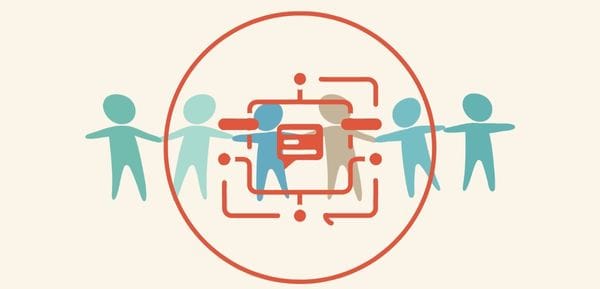
Complaint collectives are her tactical support systems for organizing around and against oppression. The complaint collective, I think, is an ideal form of strategic resistance. Regimes of domination work by emphasizing that subjugated people are individuals who have unique rights and can therefore make their own decisions regarding how to cultivate a meaningful, viable life. They shape our eyes not to see them. These collectives also discourage discourse and rumination on the problem and encourage movement toward solutions. Fortunately, many radical, dissident, and otherwise anarchic thinkers understand that because subjugated people are discriminated against as a class (whether the class is people of color, women, etc.), a collective struggle against white and male power is not only smart but imperative. But Ahmed recognizes the limitations of complaint collectives as well. Specifically, she concludes sharing one’s struggle with the institutions of the domination system is not always productive. The process, the frames and labels, the potential isolation of a complainant can all work to prevent resolution. In addition to incorporating complaint collectives into our process of strategic resistance, we need to prepare our opposition to doctrines of gradualism and compromise which slow down the process of liberation. A group need not be as patient as an individual.
Feminists interested in the experiences of historically subjugated groups who speak up will find value in Ahmed’s Complaint! I found Ahmed’s clear articulation of the inefficacy of telling victims to just start speaking up regarding the discrimination and harassment they experience. The system of domination is designed to make speaking up and speaking out difficult and to shut victims up. I see it as a way that institutions “teach us a lesson” by showing us that the attempt to combat oppression will be met with both salient and sneaky, subtle forms of resistance to our needs. Yet, as Ahmed states, “the complaints in the graveyard can come back to haunt institutions. We can come back to haunt institutions. It is a promise” (308). Let the haunting begin.
Complaint!, by Sara Ahmed (Duke University, 2021).
Jocelyn Crawley is a radical feminist writer who resides in Atlanta. Her passions are strategizing against rape and sexual assault with other dissident people and thinking through how patriarchy operates in critical, methodological ways. Jocelyn believes that radical work can and should take place in communities with respect for the role that subjectivity plays in creating internal dissent, new questions, and the evolution of consciousness.
MR is an autonomous RadMatFem project.
Tip for the contributors!
 PodBean Development
* NEW EPISODE * Free *
Reach out anytime for any reason: info@medusarising.org.
Ghost, collects no info on our subscribers. We own our list. Medusa Rising neither shares nor sells any subscriber/contributor information. Some writers use pen names. !! Feminist Safety First !!
( ^-^)ノ∠※。.:*:・'°☆ ( ^-^)ノ∠※。.:*:・'°☆ ( ^-^)ノ∠※。.:*:・'°☆