Karen "Fucking" Wheeler: The Only Woman Who Gets Power (After Proving She Knew Her Place) | by Beatrix Kondo
Review | Part 4 | Upside Down Feminism

May 1, 2026 -- DANCING GODDESS BY HEIDE GOETTNER-ABENDROTH
Included in Pythia & Tiamat subscriptions, tickets available for Corras and Yacumamas.
Public Visitors, become a member to join in the scheming 😁
For four seasons, Karen Wheeler had been the clueless suburban mom: perfectly coiffed, wine glass in hand, completely oblivious. Actress Cara Buono developed a secret backstory that Karen was a functioning alcoholic numbing herself with wine to justify the disconnection—the actress, yes, not the Duffers.
Then Season 5 happened.
A Demogorgon invades to kidnap Holly. Karen, drunk in the bathtub listening to ABBA's "Fernando," hears Holly scream and instantly switches to warrior mode. She hides with Holly, fights the Demogorgon hand-to-hand using a broken wine bottle as a weapon. Ted tries to help with a golf club, gets thrown, ends up in a coma. Karen, gravely injured, keeps fighting. Later, still wounded in the hospital, she saves Max from Demodogs, enters a burning room, and kills the monsters in an epic sequence.
The Duffers' stage direction: Karen "fucking" Wheeler.
Here's the problem: Karen is the ONLY major female character who gets an empowered ending. And she only earns it after four seasons of performing perfect suburban femininity.
The Hierarchy of Who Gets to Be Fierce
The pattern is stark: Barb (the fat uncool girl) dies first. Eleven (the powerful psychic) sacrifices herself. Max (the traumatized fighter) ends up in a coma, then wakes to become Lucas's girlfriend again—and she says he saved her, alas. Robin (the lesbian) loses her girlfriend to invisibility. Nancy (the ambitious journalist) abandons her dreams and ends up alone. Joyce (the working-class single mother) becomes a background character in her own son's story—though hey, at least she gets to marry Hopper, because apparently that's the real victory for women who spent five seasons being independently fierce.
The only woman who gets to be fierce? The upper-middle-class tradwife who spent four seasons conforming to patriarchal domesticity. Karen accesses power because she performed femininity "correctly" first. She earned the right to violence by being decorative long enough. Tell me I'm wrong.
The Currency of Conformity
Look at what Karen did for four seasons: She maintained the perfect home while dressing impeccably and serving elaborate breakfasts that could have graced the pages of Better Homes & Gardens. She attended every school function with a smile plastered on her face, performing suburban motherhood with magazine-cover precision even as she smiled through Ted's obliviousness and her own wine-soaked numbness.
Karen Wheeler was the living embodiment of #tradwife culture before the hashtag existed. She was the 1980s prototype of what would become a 2020s social media aesthetic: the perfectly put-together housewife who makes domesticity look effortless, who finds fulfillment in serving her family, who maintains her appearance and her home as dual expressions of proper femininity. The hair. The outfits. The spotless kitchen. The elaborate meals. The patient smiles while her husband says something idiotic. She represents the women whom the 1970s era of women’s movement did not touch. Every crisis: calm exterior, measured response, appropriate concern expressed through acceptable channels. Karen Wheeler was the architectural blueprint of 1980s suburban femininity—composed, controlled, and contained. Repressed. And like many women of her class, the subjects of The Feminine Mystique, the repression became the self-harm of her genteel alcoholism.
The show frames this as wallpaper. Background mom doing background mom things while the real story happens elsewhere. However, this performance required constant work, self-monitoring, sublimation of whatever Karen actually felt beneath the wine-numbed surface.
She was sexually available but never threatening (the Billy subplot in Season 3, where she almost had an affair but pulled back at the last moment, staying "good"). The show that gave her the world’s most boring husband let her be tempted—let her feel desire, let her prepare for the motel, let her sit by the pool in that striking swimsuit—then rewarded her for choosing "right." For pulling back. For remaining faithful not through lack of opportunity but through moral fortitude.
This matters because Karen proved she could be sexual and still choose domesticity, could be desirable and still choose duty, could want something for herself and still choose family—the show needed her to be tempted so she could demonstrate proper feminine loyalty by resisting, which is tradwife ideology at its core: you can have desires, but good women choose family over self every single time.
Karen Wheeler spent four seasons proving she knew her place—dutiful, decorative, blissfully unaware of the chaos her children were living through. Only then did the Duffers grant her permission to break things.
Compare this to what happened to the women who refused to perform traditional femininity from the start:
Eleven, who had power before she had proper socialization, gets erased. The girl who never learned to be decorative, who was a weapon before she was a woman, who accessed power without first proving she could be contained—she disappears from existence. The narrative sacrifices her because she never performed the prerequisite femininity.
Max, who was tough and independent from her introduction, gets punished with trauma and coma—and it's worth noting that Eleven learned sorority from Max despite an initial jealousy that was entirely normal given how thoroughly patriarchy loves and encourages women to see each other as rivals, but the show punished Max anyway for daring to be fierce from the start.
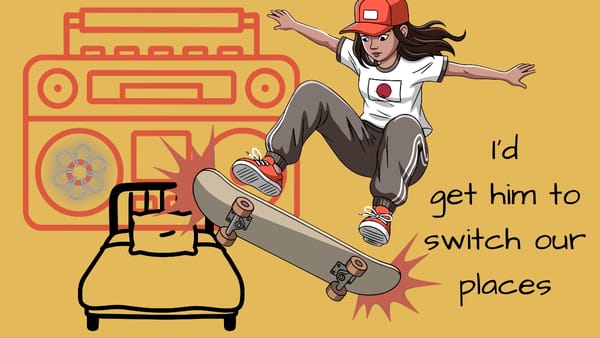
She showed up skateboarding, giving zero fucks what anyone thought, rejecting Lucas until she decided otherwise, making her own choices, being visibly powerful without apology. The show responded by breaking her repeatedly—dead brother, abusive stepfather, Vecna's curse, bones snapped, eyes destroyed, mind ripped away, coma. Then, when she finally wakes, she gets handed back to Lucas as girlfriend rather than given her own arc of recovery and power.
Nancy, who wanted a career over domesticity from episode one, gets isolated and dream-crushing. She walked into the show with ambition visible, with goals articulated, with a refusal to settle already part of her character. Five seasons later, she's alone, jobless, with both Steve and Jonathan gone from her life, her dreams of journalism demolished because she wanted them too loudly from the start—no romantic "choice" to make because both men removed themselves, leaving her with neither career nor relationship.
Robin, lesbian and nerdy, gets relationship erasure. She came out, took up space, spoke too fast, thought too hard, loved too obviously. The show gave her Vickie then made Vickie disappear, gave her lesbianism then made it background noise, gave her intelligence then used it as quirk rather than power.
Joyce—we'll get to Joyce. But add her to this list. The woman who was fierce from minute one, who never performed suburban perfection, who was working-class and desperate and loud. She gets sidelined in her own son's story. And it's worth pausing on who Joyce Byers actually is—which is to say, who Winona Ryder is. The very teenagers this show is about grew up watching her on the big screen. She was the it-girl of GenX slacker chic, the patron goddess of the beautifully unhinged and the defiantly weird. She carried an entire cultural moment on her slouched, thrifted shoulders. Stranger Things knew exactly what it was doing when it cast her—and then, season by season, did less and less with her.
The math is simple: conform first, earn power later. Want power from the beginning? Get destroyed.
Karen is written for four seasons building credit in the bank of patriarchal approval. The other women spent those seasons being themselves—powerful, ambitious, lesbian, desperate, unconventional. Karen cashed in her credit for one season of Karen "fucking" Wheeler. The other characters paid for their refusal to conform with five seasons of punishment—and nails in their literal or metaphorical coffins in the finale.
The Acceptable Container for Female Violence
Even Karen's empowerment gets wrapped in the safest possible justification: maternal instinct. The show frames her transformation as biology rather than choice. She hears Holly scream and something primal activates. The narrative treats this as awakening rather than decision. Karen becomes badass the way bears become protective: through instinct, through biological imperative, through the most traditional female role possible.
Starting at $2 USD per month | Access to complete posts, Gorgon Posse videos, Commenting & conversation, External reading recommendations, & Special Event invitations.
First month always free.